
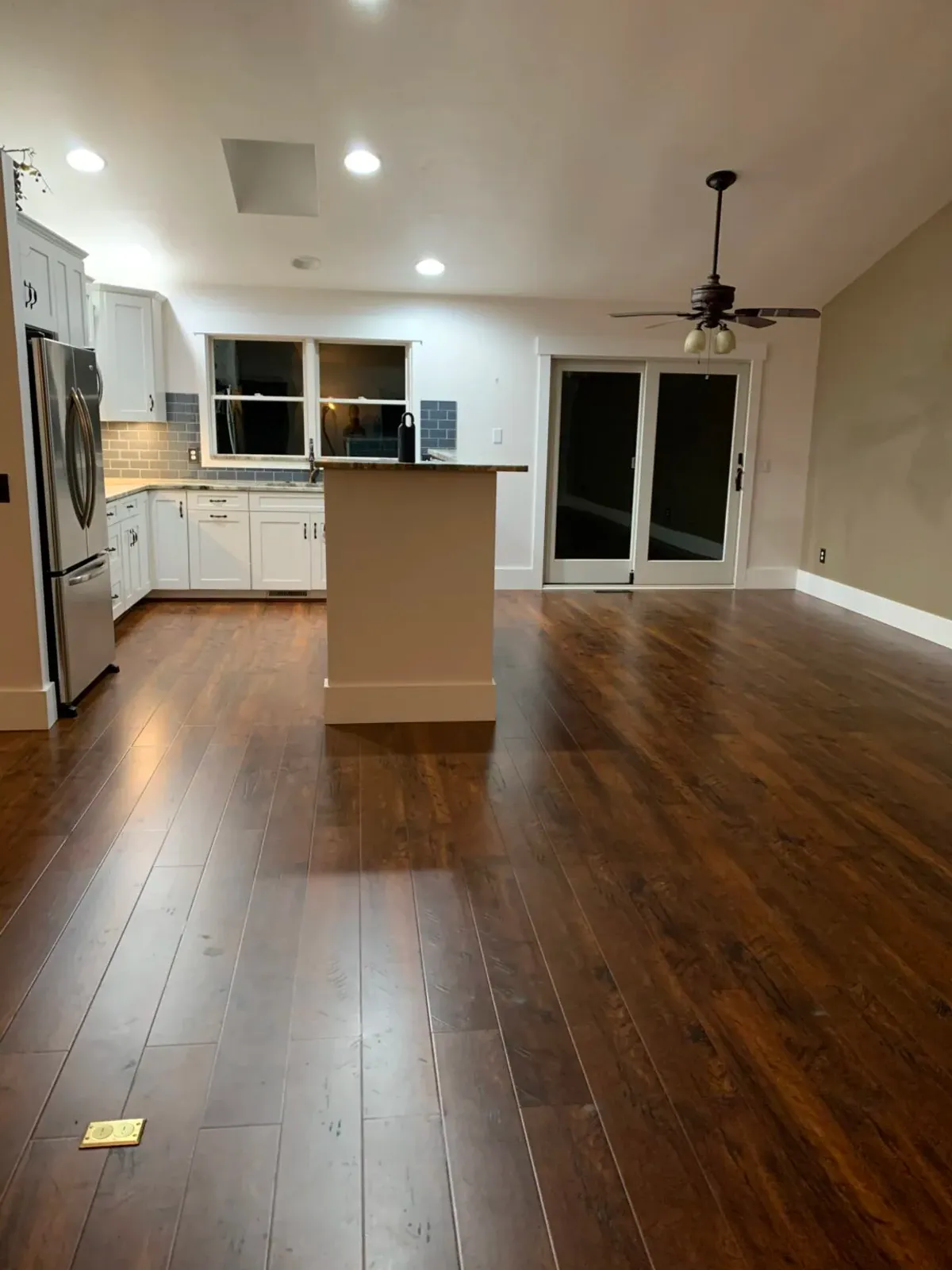
Why This Decision Matters More Than It Used To
Ten years ago, the flooring choice was simpler. Hardwood was premium. Tile was for wet rooms. Everything else was budget. The categories did not overlap much.
That changed when rigid-core luxury vinyl plank (LVP) technology advanced enough to genuinely compete with hardwood and tile on appearance, durability, and, in wet areas, performance. Now you have three serious options for almost every room in the house, and the right answer depends on where you are installing, how you live, and what you are trying to achieve.
This guide cuts through the marketing and tells you what actually differentiates LVP, hardwood, and tile in 2026, so you can choose the right material for each space in your home rather than defaulting to one material everywhere.
LVP Flooring: What It Is and How It Works
Luxury vinyl plank is a multi-layer synthetic flooring product. The core layer (either SPC, stone polymer composite, or WPC, wood polymer composite) provides rigidity and dimensional stability. Above that is a photographic layer printed to mimic wood or stone grain. Over that sits a wear layer measured in mils, the thicker the wear layer, the more durable the product.
Key facts about LVP:
- Rigid-core LVP is 100% waterproof at the plank level. Spills, pet accidents, and even minor flooding do not damage the planks themselves. This is the single biggest advantage LVP holds over hardwood.
- WPC cores add a foam layer that makes the floor noticeably softer and warmer underfoot, a real advantage over tile on cold concrete subfloors.
- Quality residential LVP starts at a 12-mil wear layer. The 20-mil standard on mid-range products handles heavy furniture, rolling chairs, and large dog nails for 15 to 25 years of residential use.
- LVP cannot be refinished. Once the wear layer is scratched through, you replace the planks, not sand and refinish them.
Hardwood Flooring: Solid vs. Engineered
Hardwood comes in two forms and the distinction matters.
- Solid hardwood is a single piece of wood, typically 3/4 inch thick. It can be refinished multiple times over its lifespan, giving floors in older homes a 50-year-plus service life when properly maintained. The tradeoff is that solid hardwood responds to humidity and moisture. It expands and contracts with seasonal changes, which is why it is never recommended for basements, bathrooms, or over radiant heating systems.
- Engineered hardwood is a real wood veneer (typically 2mm to 6mm thick) bonded over a plywood or HDF core. It is dimensionally more stable than solid wood, performs better over concrete slabs and in humid environments, and works in basements where solid hardwood does not. Depending on veneer thickness, it can typically be refinished one to two times. For most Pittsburgh-area homes with older construction, engineered hardwood is the practical choice. It delivers the authentic wood look and refinishing ability without solid hardwood's moisture sensitivity.
- Current 2026 trend: Wide-plank white oak in matte or satin finishes has become the dominant hardwood choice nationally, replacing dark-stained narrow planks and high-gloss finishes that defined the 2010s.
Did You Know?
Tile flooring at $10 per square foot, lasting 75 years, has an effective ownership cost of just $0.13 per square foot per year. Compare that to carpet at $5 per square foot with a 10-year lifespan, that comes out to $0.50 per square foot per year. (Source: VMP Power Flooring)
Tile Flooring: Ceramic vs. Porcelain
Tile is the oldest and most durable flooring option available. The distinction between ceramic and porcelain matters more than most homeowners realize.
Ceramic tile is made from clay fired at lower temperatures. It is less dense, absorbs more water (around 3% or higher), and is slightly easier to cut and install. Fine for walls and low-traffic floor areas, but not the best choice for high-moisture zones or exterior-adjacent spaces.
Porcelain tile is fired at higher temperatures, creating a denser, harder product with water absorption below 0.5%. It is significantly more durable and moisture-resistant than ceramic, making it the standard for bathroom floors, kitchens, mudrooms, and any space where long-term performance matters.
Tile's biggest weakness is grout. Grout lines require periodic sealing and are vulnerable to mold and discoloration in wet environments if not maintained. They also create a harder, colder surface underfoot, a meaningful comfort consideration for kitchens or anywhere someone stands for long periods.
Tile installed properly on a stable subfloor can last 50 to 75+ years. It is also the only flooring option that works with radiant floor heating at full efficiency.
Quick Comparison Between LVP vs. Hardwood vs. Tile
| Category | LVP | Hardwood | Tile (Porcelain) |
|---|---|---|---|
| Water resistance | Excellent (100% waterproof plank) | Poor (solid) / Moderate (engineered) | Excellent (with sealed grout) |
| Durability | Very good (15-25 yrs) | Excellent (50+ yrs with refinishing) | Excellent (50-75+ yrs) |
| Refinishable | No | Yes (solid: many times; engineered: 1-2x) | No (replace tiles) |
| Comfort underfoot | Good (WPC) / Moderate (SPC) | Good | Poor (hard, cold) |
| DIY-friendliness | Excellent (floating install) | Moderate | Difficult |
| Resale value perception | Good and rising | Premium | Premium (especially porcelain) |
| Best rooms | Whole home, basements, pet homes | Main living areas, bedrooms | Bathrooms, kitchens, mudrooms |
| Radiant heat compatible | Limited | Poor (solid) / Moderate (engineered) | Excellent |
Cost Breakdown: What You'll Actually Pay in 2026
Material costs tell only part of the story. Installation significantly changes the total investment.
| Flooring Type | Average Material Cost (per sq ft) | Average Installation Cost (per sq ft) |
|---|---|---|
| LVP (mid-range) | $2 to $5 | $4 to $10 |
| Engineered hardwood | $4 to $10 | $8 to $16 |
| Solid hardwood | $6 to $14 | $10 to $20 |
| Ceramic tile | $1 to $4 | $5 to $12 |
| Porcelain tile | $3 to $8 | $8 to $20 |
LVP wins the cost comparison at every price point, material, installation, and total project cost. Its floating-floor installation method reduces labor time significantly compared to nail-down hardwood or mortar-set tile.
For a 500 square foot project, the difference between LVP and solid hardwood can easily be $3,000 to $8,000 installed. That gap narrows at premium LVP tiers but does not disappear.
To get flooring pricing specific to your project in Western Pennsylvania, contact Hammer Home Service for a consultation on materials and installation.
Water Resistance: The Factor That Changes Everything
Water resistance is not just about bathrooms. It determines your options for kitchens, laundry rooms, mudrooms, below-grade spaces, and any home with pets or children.
LVP is the clear winner here. The planks themselves will not swell, warp, or delaminate from water exposure. This is why LVP has become the go-to choice for full-home flooring in families with pets or young children, a single product handles every room without exception.
Hardwood should not be installed in bathrooms or laundry rooms under any circumstances. In kitchens, engineered hardwood performs reasonably well, but high-moisture environments accelerate wear on the finish and can cause swelling at seams if water sits. Solid hardwood in a kitchen is a risk, manageable with careful maintenance, but not forgiving of neglect.
Tile is fully water-resistant when properly installed with sealed grout. In wet rooms, porcelain tile is still the industry standard because it is permanent, hygienic, and impervious to moisture. Its limitation is comfort: tile floors stay cold and hard year-round unless paired with radiant heating.
Room-by-Room Recommendation Guide
Living room and bedrooms: Hardwood or LVP. Hardwood adds resale value and character in main living areas. LVP is the smart choice for families with pets or young children who need durability over premium feel.
Kitchen: Porcelain tile or LVP. Tile delivers the best long-term performance and stands up to heat, grease, and heavy traffic. LVP is a strong second choice for homeowners who prefer a softer, warmer feel underfoot.
Bathrooms: Porcelain tile only. The moisture level in bathrooms eliminates hardwood and makes LVP a compromise. Tile is permanent, sanitary, and built for the environment.
Basement: LVP (SPC/rigid-core). Solid hardwood is not suitable below grade. Engineered hardwood works with certain moisture conditions. Rigid-core LVP handles below-grade moisture, concrete subfloors, and temperature variation without issue.
Mudroom and laundry room: Porcelain tile. High traffic, dirt, and moisture make tile the most practical choice. It cleans easily and lasts indefinitely.
Home with pets: LVP is the most practical whole-home choice. Rigid-core LVP handles pet nails, accidents, and heavy traffic better than any other material.
You can browse real flooring installations completed by Hammer Home Service on our projects page.
FAQ
- What is the difference between LVP, hardwood, and tile flooring? LVP (luxury vinyl plank) is a synthetic waterproof floating floor that mimics wood or stone. Hardwood is real wood, either solid or engineered, that offers authentic grain character and refinishability. Tile (ceramic or porcelain) is a fired clay product prized for durability and moisture resistance. Each excels in different environments and serves different homeowner priorities.
- Is LVP flooring as good as hardwood? It depends on what "good" means to you. LVP is more water-resistant, more pet-friendly, easier to install, and less expensive. Hardwood is refinishable, adds higher perceived resale value, and has a warmth and authenticity that quality LVP approaches but does not fully replicate. For functional performance in a busy household, LVP often wins. For long-term investment in main living areas, hardwood is the premium choice.
- Which flooring is best for kitchens? Porcelain tile or LVP. Tile offers the best long-term durability and moisture performance. LVP provides a softer, warmer feel with comparable water resistance. Solid hardwood is not recommended for kitchens.
- What is the most durable residential flooring? Properly installed porcelain tile lasts 50 to 75+ years with minimal maintenance. Solid hardwood with refinishing can also last 50+ years. LVP's lifespan at 15 to 25 years is shorter, but its near-zero maintenance and waterproof performance make it highly practical for many homeowners.
- Can LVP be installed in basements? Yes. Rigid-core LVP (SPC or WPC) is the best flooring choice for below-grade spaces. It handles concrete subfloors, below-grade moisture conditions, and temperature variation that would damage hardwood.
- Which flooring adds the most resale value? Hardwood in main living areas consistently earns the strongest resale response, particularly in Pittsburgh's older neighborhoods where buyers view it as a quality indicator. Porcelain tile in bathrooms and kitchens is also viewed as a premium upgrade. Quality LVP has improved significantly in buyer perception but still trails hardwood in premium markets.
- How much does flooring installation cost in Western PA? LVP runs $4 to $10 per square foot installed. Engineered hardwood runs $8 to $16 per square foot installed. Porcelain tile runs $8 to $20 per square foot installed, depending on tile size and subfloor preparation required. Contact Hammer Home Service for project-specific pricing.
- What flooring is best for homes with dogs? Rigid-core LVP is generally the best choice for pet households. It is waterproof, scratch-resistant, and softer on aging pet joints compared to tile. Porcelain tile is the most scratch-resistant option but is harder and colder underfoot.