
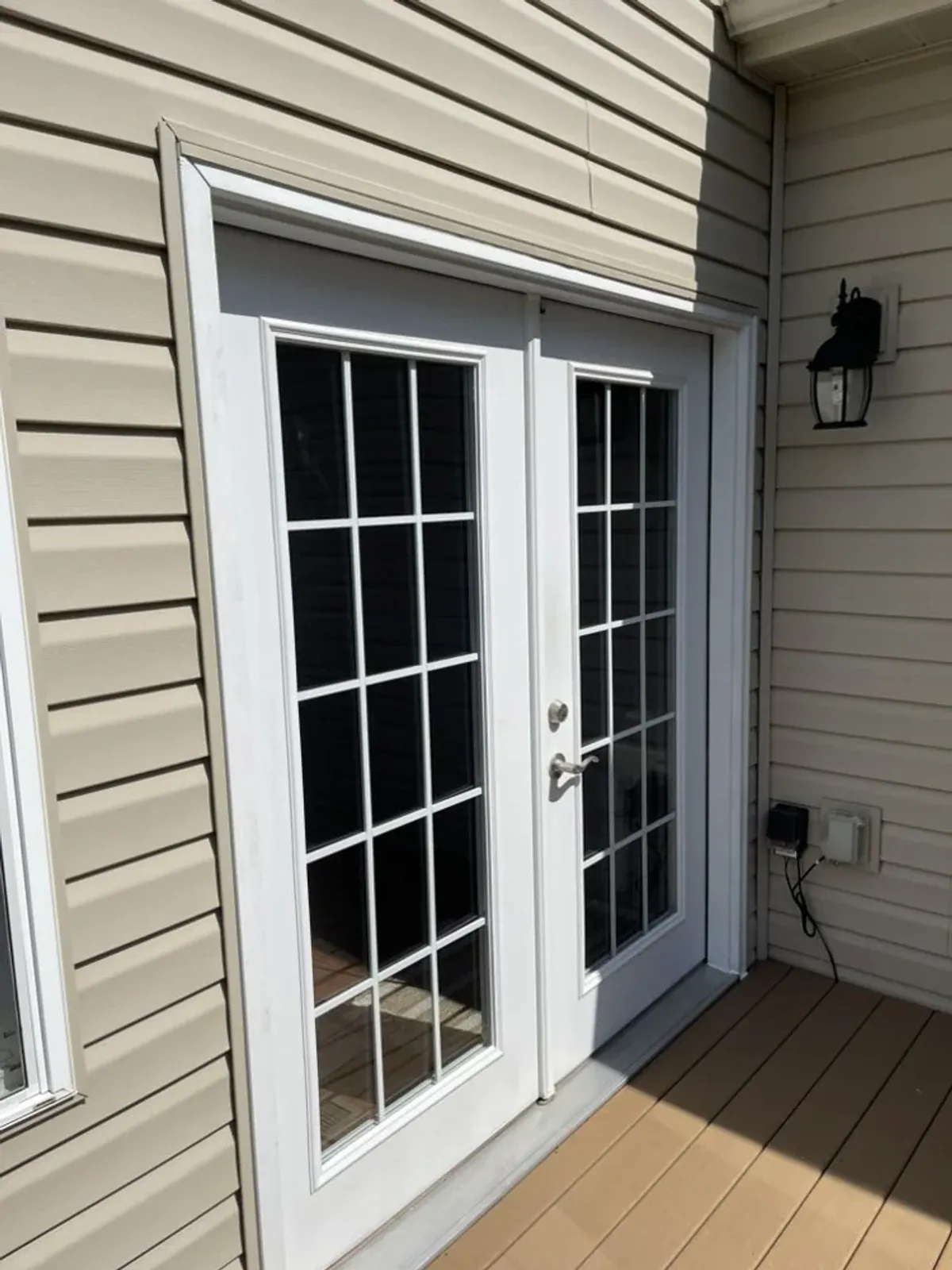
A soft spot at the bottom of an exterior door frame can look like a paint problem, but it may show that water has reached the wood for some time. The damage could be limited to trim or extend into the jamb, threshold area, or concealed framing. The sound substrate and moisture source—not appearance alone—should guide repair or replacement.
Know Which Part of the Doorway Is Rotted
“Door frame” is often used for everything around a door, but the parts have different jobs:
- Jamb: The vertical boards and top piece lining the opening. Hinges attach to one side jamb, and the latch meets the other.
- Exterior trim or casing: The visible boards covering the joint between jamb and wall.
- Threshold: The component across the bottom of an exterior doorway that supports the transition and helps direct water away.
- Rough framing: The wall framing around the opening, concealed behind the jamb and trim.
A rotted trim section is a different repair from decay at a hinge, beneath the threshold, or in the rough opening. New trim cannot correct a weakened jamb or damaged support below it.
Signs That Deserve a Closer Look
Exterior door rot often develops near lower corners where water can linger. Look for:
- Peeling, blistered, or repeatedly failing paint
- Dark staining, cracks, swelling, or crumbling edges
- Wood that feels unusually soft
- Gaps between trim, jamb, threshold, and siding
- Water stains on nearby interior trim, flooring, or walls
- New rubbing, poor latching, drafts, or daylight around the door
- Split or detached sealant at joints
These are warning signs, not a diagnosis. A sticking door can also result from loose hardware, seasonal movement, or settlement, while discoloration may be surface weathering. Fresh paint can hide soft wood.
Observe Safely Before Disturbing Anything
Inspect the doorway from inside and outside in good light. Note whether the concern is at the hinge side, latch side, head, lower corner, or threshold. After rainfall, observe where water travels and whether it collects near the entry.
Photograph:
- The entire doorway, roofline, landing, and nearby wall
- Straight-on interior and exterior views
- Cracks, gaps, stains, and soft-looking areas up close
- The threshold, nearby exterior surface, and visible water movement
Do not pry off trim, puncture wood, or open the wall simply to investigate; you could disturb flashing or expose the opening to weather. If coatings may be old, avoid sanding, scraping, or creating dust until they can be handled with appropriate precautions. Keep children and pets away from chips and dust.
Find the Moisture Source Before Choosing a Repair
Wood decay needs persistent moisture. A durable fix addresses how water arrived and how the assembly will dry, not only the damaged surface.
Possible contributors include:
- Failed sealant or gaps where trim meets siding or masonry
- Water sloping toward the door or splashing back from a landing
- Damaged flashing or poor transitions above and beside the opening
- A threshold or weather seal that no longer manages water
- Roof or gutter runoff, wind-driven rain, condensation, or another leak
Western Pennsylvania's rain, snow, ice, and freeze-thaw cycles can widen small openings in coatings and sealant. Climate alone is not a diagnosis; the assessment should trace the actual water path.
When a Focused Door-Frame Repair May Work
A localized repair can make sense when damage is limited and the surrounding material is dry and sound. Unsound wood must be removable without leaving compromised material, and what remains must provide a solid substrate. The jamb also has to stay aligned so the door opens, latches, and seals.
The plan should confirm the extent of decay, the condition behind nearby trim, whether the affected area supports hardware or the threshold, and how the moisture path will be corrected. Replacement wood, joints, flashing details, sealant, and finish must work together to shed water.
Focused work may remove and rebuild a damaged section without replacing the entire door unit. Handyman services can fit a contained repair when the opening and substrate remain sound.
When Replacement Is the Better Direction
Consider replacement when deterioration is widespread, crosses several components, or leaves no reliable substrate for a lasting repair. It may also be appropriate when the jamb cannot securely hold hinges or strike hardware, threshold support is compromised, or localized work cannot restore alignment.
Movement, substantial water entry, damaged interior finishes, or concern about concealed rough framing calls for professional assessment. These signs do not prove structural damage. A professional can determine what needs controlled access, what can remain, and whether the surrounding structure needs another qualified evaluation.
Replacement does not automatically include every nearby component. Scope should follow the damage and the ability to connect new work to sound, weather-managed materials.
Why Paint, Caulk, and Filler Are Not the First Fix
Paint protects dry, sound, prepared wood. Sealant closes properly detailed joints. Filler may suit limited cosmetic restoration on an appropriate substrate.
None stops active decay or restores a weakened connection. Filling soft wood, caulking over trapped moisture, or painting before correcting the source can conceal continued deterioration. Do not treat structural or hardware-bearing damage with filler.
First trace the moisture, remove unsound material as required, confirm sound substrate, rebuild, restore water-shedding details, and then finish the surface.
A Real Exterior Door-Frame Repair
Hammer Home Services documented an exterior door-frame rot project where years of moisture had rotted the frame and allowed drafts and water inside. The damaged wood was removed, the frame was rebuilt, and the assembly was sealed against the elements.
Reduce the Chance of Rot Returning
Include exterior doors in a seasonal walk-around. The fall home maintenance checklist for Pennsylvania is a useful prompt to find failed coatings, open joints, blocked drainage paths, and runoff aimed at an entry before winter.
Keep the threshold area clean, maintain finishes as directed, and observe rain and melting snow. If a joint repeatedly opens, investigate why it moves or stays wet instead of continually covering it.
Rotted Door Frame FAQ
Can only the bottom of a rotted jamb be repaired?
Sometimes. A section repair may last when decay is localized and dry, sound wood remains around it. Moisture, hardware support, alignment, and the threshold connection still need evaluation.
Does a rotted frame mean I need a new door?
Not necessarily. The door slab may remain serviceable while part of the jamb or trim is repaired. Widespread damage, failed hardware support, poor alignment, or an unsuitable opening may favor replacement.
Can I cover soft wood with filler and paint?
No. Soft wood has lost integrity. Filler and paint neither stop moisture nor restore sound support.
How can I tell how far the rot extends?
Surface appearance cannot show the full extent. A professional follows visible conditions and moisture clues, then uses controlled access only where needed to inspect concealed edges and substrate.
What should I send for an assessment?
Send wide doorway photos, close views of each concern, interior and exterior angles, the threshold and landing, and any visible water during rain. Note when the issue appeared and whether door operation changed.
Get the Opening Assessed Before the Damage Spreads
Early review can separate a contained trim or jamb repair from a larger opening problem. Hammer Home Services can assess the visible damage, discuss appropriate access, and develop a repair scope based on the actual condition of the doorway. Contact Hammer Home Services to share photos and describe what you are seeing.